

Tubal Ligation & Reversal
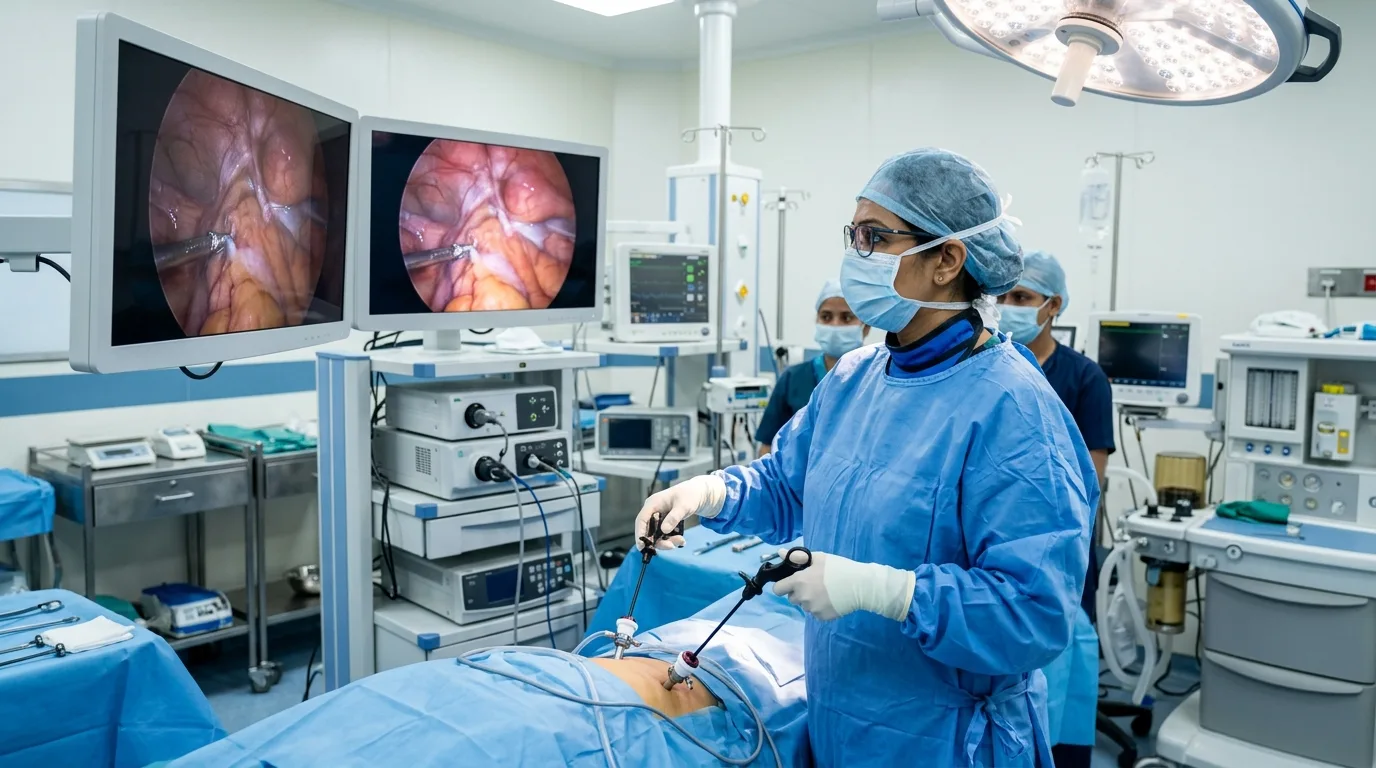
What is Tubal Ligation & Reversal?
Tubal Ligation (Tubectomy) is a safe, permanent form of female sterilization for women who have completed their family. In contrast, Tubal Reversal (Microsurgical Tubal Re-anastomosis) is a delicate reconstructive procedure that re-opens and reconnects previously ligated fallopian tubes, restoring the natural biological pathway for sperm and egg fertilization.
At Dr. Deepika Lalwani (Nagwani)'s Clinic in New Kalyani Nagar & Wadgaon Sheri, Pune, we support women across every phase of family planning. With over 10+ years of clinical and microsurgical experience, Dr. Deepika Lalwani (MBBS, DGO Mumbai) provides daycare laparoscopic sterilization as well as high-precision tubal reversals for women seeking to conceive naturally again.
Initial consultations, tubal length feasibility audits, and partner evaluations take place in our private clinic. Reconstructive surgical procedures are personally conducted by Dr. Deepika Lalwani in state-of-the-art partner tertiary hospital operating suites in Pune.
Tubal Ligation vs. Tubal Reversal Comparison
While tubal ligation is a brief procedure to permanently occlude the tubes, reversal is a delicate microsurgery that precisely joins them back together.
Tubal Ligation (Tubectomy)
Permanent Sterilization • Contraception
Permanent, highly reliable birth control preventing future pregnancy.
Quick laparoscopic procedure taking 20 to 30 minutes to complete.
Fallopian tubes are tied, clipped, or sealed using medical rings or bipolar energy.
Over 99.5% effective; patients return home the same day (daycare basis).
Tubal Ligation Reversal
Fertility Reconstruction • Re-anastomosis
Reconstruct fallopian tube patency to restore natural monthly conception.
Delicate microsurgery requiring 2 to 3 hours of high-magnification suturing.
Excising scarred segments and re-approximating luminal layers with 6-0/7-0 sutures.
Success averages 40% to 75% depending on tube length, method, and maternal age.
Key Factors Influencing Reversal Success
We conduct a rigorous pre-surgical audit of these indicators to give every couple a realistic, transparent prognosis.
Original Sterilization Technique
Tubes occluded with mechanical clips (Hulka/Filshie) or silicone rings preserve the most fallopian tissue, offering the highest reversal success compared to cauterization.
Remaining Fallopian Tube Length
For successful microsurgical re-anastomosis, at least 4 cm of healthy, well-vascularized fallopian tube must remain on at least one side for active egg transport.
Maternal Age & Ovarian Reserve
Maternal age and Anti-Müllerian Hormone (AMH) levels directly govern oocyte quality. Highest conception rates occur in women under 35 with confirmed regular ovulation.
Partner Semen Parameters
A comprehensive baseline semen analysis is mandatory prior to surgery to confirm that natural conception is biologically feasible post-reversal.
Our Pre-Surgery Preparation & Recovery Guidelines
Follow these essential surgical preparation steps to promote optimal tissue healing and patency.

Diagnostic HSG & Operative Records
Retrieving original surgical discharge notes and performing a hysterosalpingogram (HSG dye test) to measure proximal tube stumps and confirm uterine health.
Pre-Anesthetic Fitness Clearance
Completing comprehensive blood tests, ECG, chest radiography, and pre-anesthetic checkups for general anesthesia in a sterile hospital suite.
Post-Operative Recovery Plan
Resting for 7 to 10 days at home, avoiding lifting objects >5 kg, and keeping the mini-laparotomy dressing clean and dry to ensure smooth healing.
The Reversal Microsurgery Journey Step-by-Step
A structured surgical roadmap from pre-operative dye verification to high-magnification layer-by-layer micro-suturing.
Every treatment and procedure at our clinic is performed with the highest standards of safety, compassion, and clinical expertise. Dr. Deepika Lalwani ensures each step of your journey is carefully monitored and optimized for the best possible outcomes.
Expert Guidance
From your initial consultation through recovery, our dedicated team is here to support you with personalized care, ensuring your comfort and peace of mind at every stage.
Step 1: Clinical Evaluation & Candidate Assessment
In-depth review of sterilization history, transvaginal pelvic ultrasound, ovarian reserve testing (AMH), and partner semen evaluation with Dr. Deepika Lalwani.
Step 2: Anesthesia & Mini-Laparotomy Access
Under general anesthesia in a sterile operating theatre, a discreet 4 to 6 cm horizontal mini-laparotomy incision is placed just along the bikini line.
Step 3: Microsurgical Re-anastomosis
Using high-magnification surgical loupes/microscopes and ultra-fine 6-0/7-0 sutures, Dr. Deepika meticulously re-aligns the mucosal and muscular layers of the fallopian tubes.
Step 4: Intraoperative Dye Patency Check & Closure
Methylene blue dye is flushed through the uterus (chromotubation) to confirm leak-free bilateral patency before layered anatomical closure with cosmetic sutures.
Why Choose Dr. Deepika Lalwani's Clinic for Tubal Surgery?
- Microsurgical Precision & Tubal ExperienceDr. Deepika Lalwani (MBBS, DGO Mumbai) specializes in high-magnification fallopian re-anastomosis with meticulous luminal alignment.
- 10+ Years of Comprehensive Family Planning AcumenExpertise spanning both daycare laparoscopic sterilization and complex fertility-restoration microsurgeries in Pune.
- Strict Prior-Appointment ConfidentialityAll consultations, ultrasound examinations, and surgical post-op checks are scheduled privately in New Kalyani Nagar.
Google Rating
Based on 105+ Reviews
Frequently Asked Questions
In Pune, laparoscopic tubal ligation (permanent female sterilization) typically ranges from ₹25,000 to ₹45,000 as a daycare procedure. Microsurgical tubal reversal (tubal re-anastomosis reconstruction under operating microscope) ranges from ₹65,000 to ₹1,15,000 in premier partner hospitals, including 1 to 2 days of hospital stay, specialized microsurgical equipment, anesthesia, and surgeon charges.
Tubal ligation (tubectomy) is a permanent contraception procedure where the fallopian tubes are clipped, tied, or sealed to prevent pregnancy. Tubal reversal (microsurgical re-anastomosis) is a delicate reconstructive surgery that removes the blocked scar tissue and reconnects the healthy tube ends to restore natural fertility.
Pregnancy success rates after tubal reversal range from 40% to 75%. Key determinants include maternal age (highest under 35), remaining healthy fallopian tube length (ideally >4 cm), the original sterilization method used, and normal partner semen parameters.
Both are effective options. Tubal reversal allows couples to conceive naturally every month without repeated medical cycles, making it cost-effective if the woman is under 35 with adequate tube length. IVF is preferred if the tubes are severely shortened, the woman is over 38, or severe male factor infertility exists.
Laparoscopic tubal ligation is performed as a daycare procedure with recovery in 3 to 5 days. Microsurgical tubal reversal involves a 24 to 48-hour hospital observation, with return to normal light activities within 1 to 2 weeks.
Consultations and pre-surgical evaluations occur at our New Kalyani Nagar clinic. Surgeries are personally performed by Dr. Deepika Lalwani at partner premier tertiary hospital operating theatres in Pune equipped with microsurgical instruments.